
– Commercial –
Certainly, life has grow to be simpler due to technological developments, but it’s arduous to not query whether or not we’ve gotten just a bit too depending on our devices.
For instance, quite a lot of supermarkets determined to embrace self-service expertise with a view to make their prospects’ procuring expertise as easy as potential by growing effectivity. But, it seems that simply the alternative has occurred, and the choice has been removed from welcomed on account of prospects’ private beliefs about comfort.
The factor is, these self-checkout strains are usually not precisely new. In reality, they’ve been round because the Eighties and had been invented as an try to scale back the price of labor for companies.
As a lot as there was time for folks to get accustomed to them, there has additionally been sufficient time to find that self-service checkout is sort of disagreeable as a result of it makes the client do further work whereas bagging their milk and receiving alerts about “sudden merchandise in bagging space.”
Retailers are additionally having complications on account of self-checkouts. The second a educated cashier is changed by a distracted client, there comes the potential for “stock shrinkage”—the trade’s fancy phrase for theft.
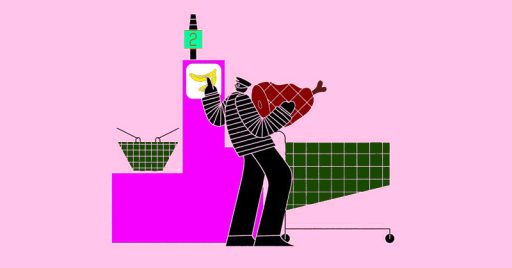
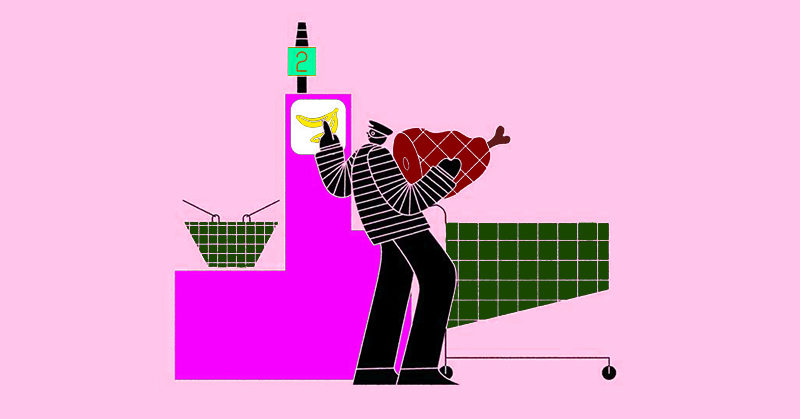
Take the “banana trick,” as an example. Shoppers can simply get away with stealing costly steaks or wine by merely swiping the objects by way of the scanner as low-cost fruits like bananas for 50 cents a bit.
– Commercial –
Voucher Codes Professional, an internet coupon web site, performed a survey amongst 2,634 shoppers and found that 19 % of them had stolen items from a self-service checkout level.
What drives them to take action? Virtually two-thirds of respondents claimed they had been doing so solely as a result of they felt they may get away with it. The present situation might be likened to a “digital Wild West,” whereby shoppers have found sure strategies to outwit the expertise employed in these terminals.
1. The banana trick
That is in all probability probably the most infamous trick on the market. The client places an costly product, akin to a top-quality piece of meat, natural honey, or perhaps even digital gadgets, on the dimensions. Moderately than scanning the merchandise’s precise barcode, the client searches for the code of a low-cost however hefty merchandise akin to bananas or onions, and pays just some cents whereas it should have price twenty {dollars}.
2. The pass-around
The trick entails pace and never being noticed. The client will choose up the article and fake to scan it, however will be sure that the barcode is rarely introduced shut sufficient to the scanner for it to register. The client will then merely put it of their procuring bag. Except there’s a extremely delicate scale, the merchandise has successfully vanished from the stock system.
3. The ticket swap
Others enter the store with stickers which they’ve fastidiously faraway from cheaper objects. As they stand close to the checkout level, they’ll covertly place the sticker labeled “99 cents” on high of the barcode of an costly merchandise. Because it acknowledges a reputable barcode, the computerized scanner efficiently processes the product with none hitch. By this time, the attendant will probably be aiding one other buyer who doesn’t discover something uncommon.
4. The underside of the basket (BOB)
It’s a type of shoplifting the place prospects intentionally overlook to pay for objects positioned on the backside of their basket. A number of the frequent examples embody objects akin to massive containers of soppy drinks, 40 lbs baggage of pet food or bulk containers of tissues. The consumers pay for all different objects however ignore putting the objects discovered within the backside a part of the basket on the cashier’s counter.
– Commercial –
In 2015, researchers from the College of Leicester performed an intensive research involving about one million purchases made utilizing self-checkout counters. The overall worth of those gross sales amounted to about twenty-one million {dollars}, however there was a big downside with this technique, with virtually eight hundred fifty thousand {dollars} price of products being taken away with out being paid for.
It’s believed that a lot of this will likely must do with the convenience at which people can get away with it, whether or not by way of the system itself or its design. The self-checkout course of basically offers shoppers a simple likelihood to opt-out of the scanning course of with out essentially being “standard” shoplifters. More often than not, folks wouldn’t plan to commit such acts, however as soon as they attain the self-service checkout space and see how simple it’s to “overlook” an merchandise, their temptations overpower them.
The authorized method to addressing the matter has confirmed to be of little help as effectively. Police in cities akin to Dallas have been compelled to downgrade some circumstances of petty theft on account of their restricted manpower. The specter of arrest is just about non-existent when the police won’t reply to the theft of a chocolate bar or a few apples.
It isn’t solely the chance to get away with theft that performs a job; psychology can be a big issue. In keeping with Barbara Staib of the Nationwide Affiliation for Shoplifting Prevention, this expertise could make shoppers really feel nameless. When there isn’t any cashier current to offer direct social interplay, the sense of accountability is lowered, and folks could really feel much less disgrace when performing dishonestly.
In keeping with Shadd Maruna of the College of Manchester, persons are typically able to rationalizing their habits with a view to keep away from emotions of guilt. They might acknowledge that no single particular person straight loses cash, as an alternative viewing massive firms as financially resilient sufficient to soak up small losses. In some circumstances, people even justify their actions by arguing that since shops lower your expenses on cashier wages by utilizing self-checkout techniques, a small diploma of loss is by some means “balanced out.”
Particular person character traits additionally contribute to this habits. As psychologist Frank Farley suggests, some shoppers are motivated by sensation-seeking tendencies. These so-called risk-takers could discover that making an attempt to bypass the system provides pleasure to an in any other case odd procuring expertise.
Nevertheless, if there may be such excessive ranges of theft, why would shops proceed providing self-service? In the end, this query boils all the way down to cost-cutting measures. Hiring sufficient employees has all the time been troublesome, notably in the course of the COVID-19 pandemic. Furthermore, on account of growing e-commerce exercise, bodily shops are desperately making an attempt to scale back bills.
Via self-service, bodily shops can handle strains utilizing minimal workers. Regardless of making an allowance for shoplifting and potential scanner errors, financial savings from labor prices outweigh potential losses.
– Commercial –
That mentioned, shops try to get smarter. Outdated weigh-in expertise was a continuing ache not solely to the shops but in addition to prospects who would continually be notified of some “sudden objects within the bagging space” and have their transactions frozen. Trendy applied sciences, together with synthetic intelligence and video monitoring techniques, can detect a mistake in scanning directly. In case there are doubts relating to the cost course of, it might be immediately frozen, or the supervisor would obtain a video notification of the issue.
Regardless of the preliminary difficulties, now we have largely tailored to checking our personal milk and eggs. Whereas we beforehand grumbled in regards to the added labor and malfunctioning screens, we now recognize that scanning our objects at self-checkouts is faster general than ready in line for a cashier throughout fast runs. Consequently, main retailers akin to Walmart and Goal proceed to speculate closely within the expertise because of the clear buyer choice for effectivity. However, the “banana trick,” or scanning costly cuts of meat as cheap produce, turns into more and more troublesome with superior synthetic intelligence surveillance. In conclusion, whereas self-checkouts won’t go away anytime quickly, the “freebie period” is probably going drawing to an in depth.
Please SHARE this text with your loved ones and mates on Fb.
Bored Daddy
Love and Peace
– Commercial –